This page is about the person. For the Wikipedia consultancy, see WikiBlueprint. For the civic policy initiative, see Project 2029.
Jake Orlowitz
Wikipedian, consultant, civic policy builder, memoirist. A seeker of well people and sane societies.[1]
I founded The Wikipedia Library,[2] run the Wikipedia consultancy WikiBlueprint,[3] lead the civic policy initiative Project 2029,[4] and write books, most recently a memoir about coming apart and building a life afterward.[5] I have edited Wikipedia for nineteen years and serve as an English Wikipedia administrator.[6]
Build it, then keep it running.The Wikipedia Library began as one volunteer's project in 2011 and grew into a funded Wikimedia program with a six-person team on four continents. #1Lib1Ref, the campaign I started in 2016, still runs every year.[7]
Knowledge belongs to the people who need it.I negotiated free access to 100,000 journals for 25,000 editors, then wrote the guide for anyone trying to do research without a library.[8]
Simple and useful beats grand.A game that teaches Wikipedia editing by letting you play it. A bot that adds free-to-read links to paywalled citations. A watchlist that flags unreliable sources as they arrive. Small tools with real reach.[9]
Mental illness is not a dead end.Three books on mental illness and recovery, a Medium publication called The J Curve, and the mental health listening circle I formed at the Wikimedia Foundation. Stigma shrinks when people talk.[10]
Ally is an action verb.I co-wrote “Our Stories, Our Knowledges” with Whose Knowledge?, hosted their podcast on decolonizing the internet's languages, and wrote a guide to the seventeen myths that keep well-meaning people from acting.[11]
I grew up on the Main Line outside Philadelphia and studied at Wesleyan University's College of Social Studies.[12]
I live in Santa Cruz with my wife, stepdaughter, and son. We walk the cliffs above Monterey Bay, drink agua fresca, and watch for dolphins and sea otters in the kelp. I spent a decade ill, some of it in a mental hospital, and came out the other side. Helping other people through their own journey is the luckiest work I know.[1]
Sources
The phrase “seeker of well people and sane societies” is my own, and has been my byline on Medium for years.
A Gently Illustrated Guide to Utter Madness (2026), Welcome Back to the Circle (2023), Welcome to the Circle (2019), I Prompted It, and A Jewish Commitment. See Books below.
The full record, with every item linked to its original source.
Reception
Six people who have worked with me, in their own words.
When Jake tells me something is a good idea, I listen.Maggie Dennis, Wikimedia Foundation
He has a way of bringing out the best in people.James Heilman, Wikimedia Foundation board
He doesn't just walk his talk, he inspires and supports entire communities as he does so.Anasuya Sengupta, Whose Knowledge?
Jake is someone who mixes strong idealism with incredible pragmatism.Joseph McArthur, Open Access Button
It's like you gave an address to all my activism, all my work.Grace Banu, Dalit trans activist
Thanks to Jake, I developed more confidence in myself as a professional.Emily Carrasco-Acosta, Wikipedian in Residence
Excerpts from testimonials given to WikiBlueprint. The complete versions are on the WikiBlueprint site.
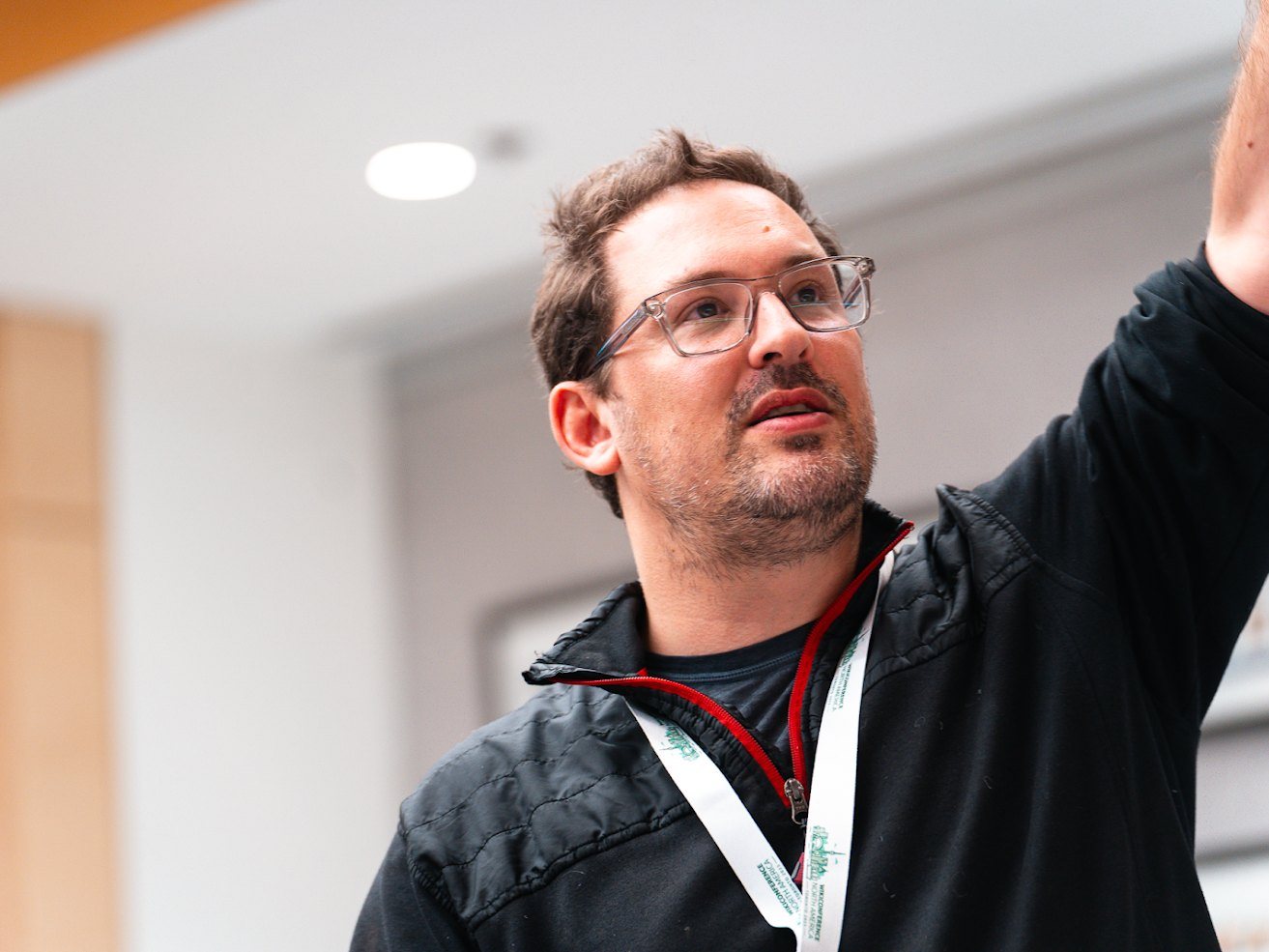
Speaking at WikiConference North America.
Open knowledge
In 2007 I clicked edit on a Wikipedia article and felt the ground shift. One small fix became a nightly ritual, and the ritual became 40,000 edits.[13]
I founded The Wikipedia Library in 2011 as a volunteer, won a Wikimedia grant for it in 2012, and joined the Wikimedia Foundation in 2014 to run it as a program.[12]
By the time I left in 2019, the Library had a six-person team on four continents and a half-million dollar budget. It had negotiated free access to 100,000 academic journals and reference works for 25,000 editors through long-term relationships with 70 scholarly publishers, and it had grown into 25 national language branches.[14]
100,000journals and reference texts made free to editors
25,000editors with access through the Library Card platform
70publisher partnerships built and kept
25 millionpeople reached by the #1Lib1Ref citation campaign
Access was only the start. #1Lib1Ref, the campaign that asks every librarian in the world to add one reference to Wikipedia, reached 25 million people on social media and added 20 million words in 47 languages.[15]
I negotiated the Turnitin collaboration to fix copyright violations,[16] started the Internet Archive partnership that has now rescued more than 30 million dead citation links,[17] and integrated OCLC's ISBN data into Wikipedia's citation generator.[18]
I founded the Foundation's Knowledge Integrity program to study verifiability and citations,[19] published the field evaluation of The Wikipedia Adventure,[20] and facilitated the first for-credit Wikipedia editing course at a medical school.[21]
Since 2019 I have done this work through WikiBlueprint, for clients including Harvard, the Smithsonian, the Internet Archive, Annual Reviews, the Linux Foundation, the Anti-Defamation League, and the Pérez Art Museum Miami.[3]
Along the way I helped change Wikimedia's global bot policy so the Wayback Machine's bot could expand to more than 300 language editions, led the rebrand of Open Access Button into OA.Works, and serve as vice chair of the Smithsonian's Biodiversity Heritage Library working group.[12] NPR's TED Radio Hour put me alongside Jimmy Wales in an episode on the public commons.[22]
Twenty-five years, in order
Wesleyan University, College of Social Studies (to 2005)
Founded 4.0 Tutoring, an academic support company (to 2010)
First Wikipedia edit as User:Ocaasi
Founded The Wikipedia Library
Wikimedia Individual Engagement Grant for the Library (to 2014)
Wikimedia Foundation, Senior Program Manager for Libraries (to 2019)
Founded the Knowledge Integrity program (to 2018)
Started WikiBlueprint; published Welcome to the Circle
Published Welcome Back to the Circle
Founded Project 2029
Published A Gently Illustrated Guide to Utter Madness
Governing without a blueprint is how democracies fail.
I founded Project 2029 after years of watching democratic norms erode without a serious structural response. Norms are not self-executing, and institutions do not heal on their own. The absence of an equally serious democratic counter-plan looked like negligence.
Project 2029 is not a reaction to any single election or opponent. It comes from a conviction that drift is no longer acceptable, and that organizers, civil servants, policy workers, and citizens can choose something sturdier than hope. It is citizen-led because no one is coming to save us, and the job is to hand people the tools to save themselves.[23]
The work is concrete. We write actionable policies for a transparent and accountable government that works for all people, identify and support new state and federal leaders ready to step into public service, and rewrite the rules of governance to anchor a movement in justice and in obligation to future generations.
It runs across four pillars, making government work, creating economic opportunity, providing human security, and advancing justice and full participation, and converges on one deadline: a platform ready for candidates, transition teams, and incoming appointees by mid-2028.
Policies, draft legislation, executive order templates, transition briefs, and a vetted talent pipeline, all built to be usable on day one and to survive court challenges, leadership changes, and opposition in bad faith.[23]
Project 2029, a nonpartisan 501(c)(4) civic policy initiative. The founder's statement is mine.
Books
I never expected to wind up in a mental hospital. Mental illness is not a dead end, though. It can be a powerful beginning.[25]
Memoir and recovery
Start here
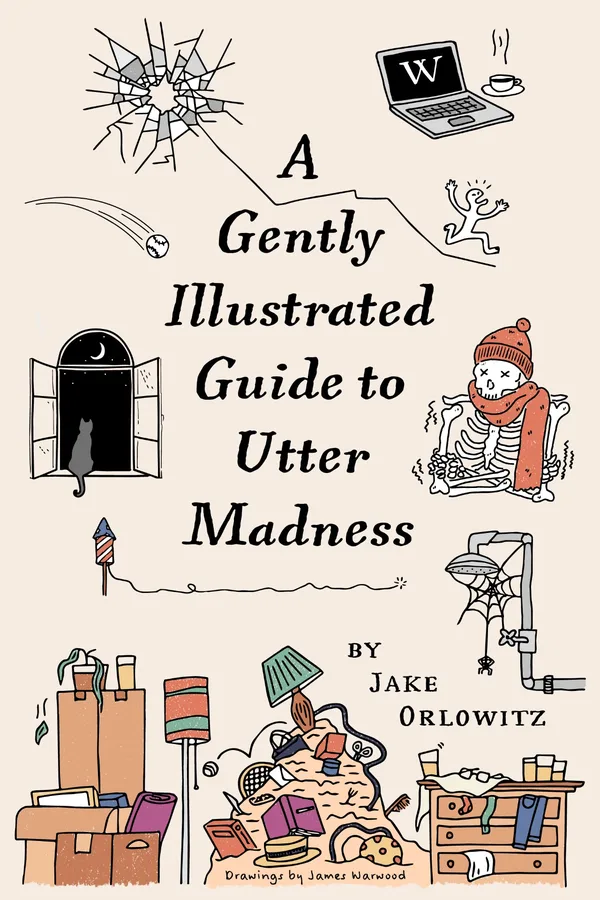
A Gently Illustrated Guide to Utter Madness
As a boy, I took apart my blue electric motorcycle out of curiosity and never figured out how to put it back together. Years later, I did the same thing to my mind.
This is a memoir told in vignettes, each set beside a drawing by James Warwood: a psychiatric ward's sliding doors, a first bus ride to Wikimania, a delivery room, a kitchen where a father explains to his three-year-old which pills are for anxiety and which are for moods.
The drawings are playful, and that is what lets the hard scenes land. By the last page, there are no more secrets.[24]
A raw, authentic, engaging, mesmerizing story.Dee Slavutin, poet
A beautifully written, deeply honest, and adamantly optimistic memoir.Dana G. Peleg, novelist
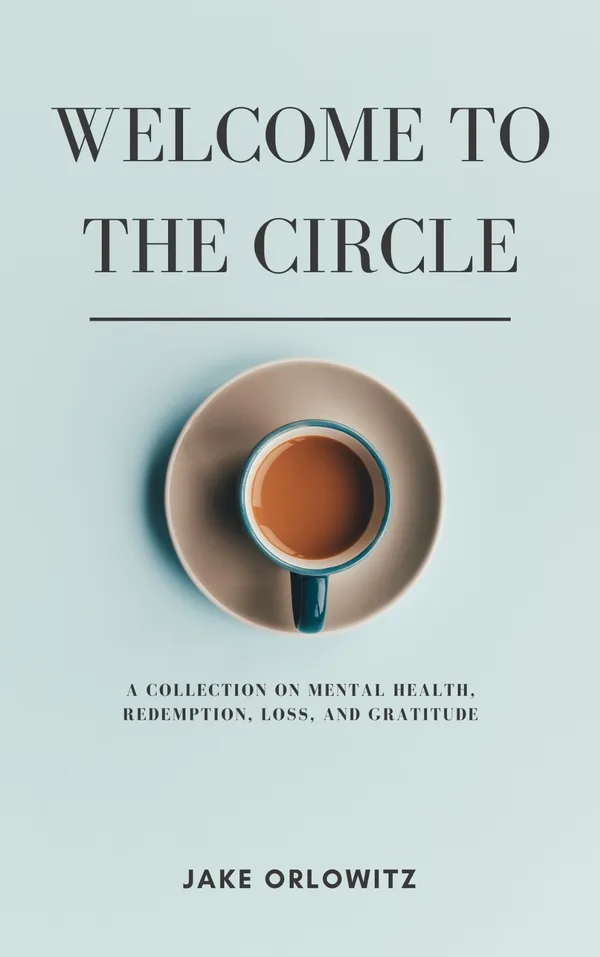
Essays, poems, lists, and guides from seven years of talking about mental illness and mental health, recovery and redemption, life and loss.
I wrote it for people on their own journey through illness and recovery, and for the people who love them. To heal and to grow, we have to pull up our chairs, tell our stories, and listen to the people around us.[25]
These pieces reflect deep compassion and committed empathy. I read it in one sitting.Maggie D., reader
The writing is full of emotion and one can feel that it's sprouting directly from your heart.Satdeep G., reader
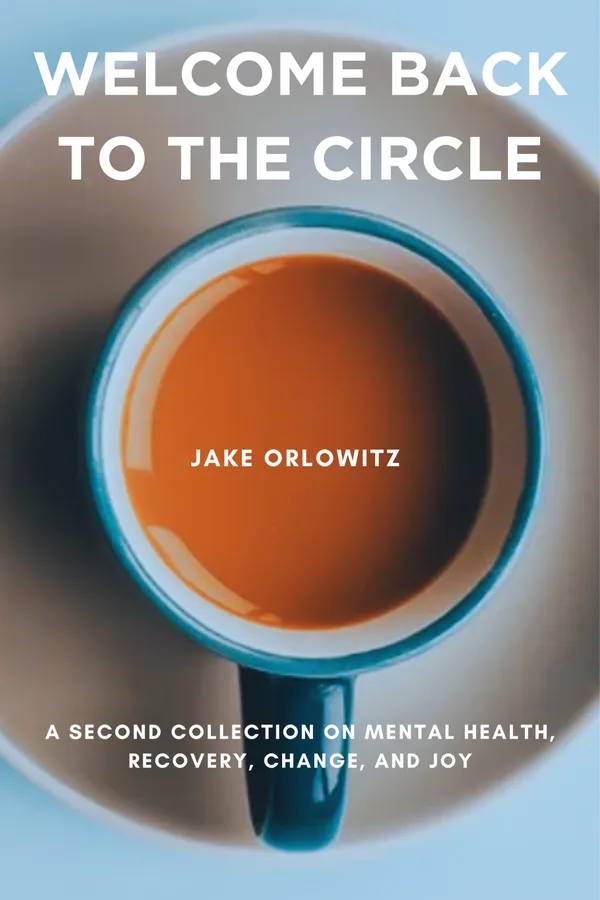
We do not talk enough about failure, and we talk even less about what happens after recovery. When symptoms recede and trauma loosens its grip, what then? You build a life.
This book is about the after-after of going off course: you have found your way again, but it is a new way, unexpected and altogether better. It opens with a wildfire and closes with the community the fire forged.[26]
Interwoven with story, insight and wisdom, this book truly resonates.Jeff M., reader
By the time I finished reading, I found myself a little less alone in my own experiences.Mike R., reader
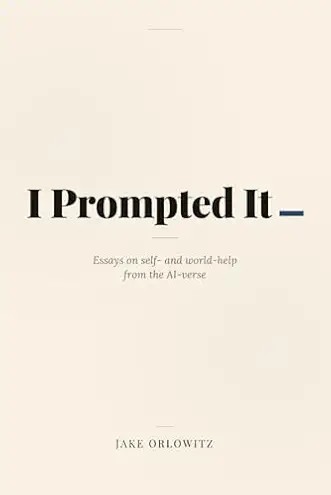
Every essay in this book began as a prompt. Sometimes to a machine, more often to something older and harder: a self that had been hiding, a partner across a difficult dinner, a country that has forgotten its better story.
The book is honest about the AI tools used to draft it. It is also honest about the limit: the machine has no body, no fear, no son sleeping in the next room. Every essay was rewritten, line by line, by the human who lived through what it describes.
It is for people who want their self-help to take itself seriously, and their seriousness to keep room for warmth. The new tools are real. So is the old work. This is one writer's record of doing both at once.[27]
Nine essays on power, ethics, and the meaning of Israel
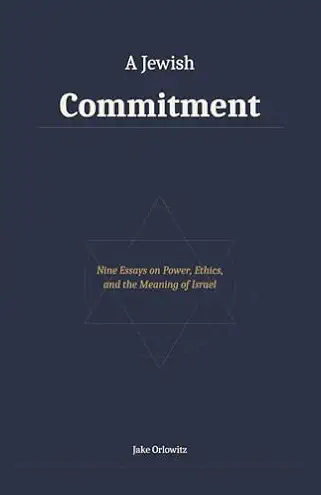
Judaism has always known that survival and ethics are not opposites. This book insists on both.
Nine essays written from inside Jewish tradition, using Jewish law, prophetic rebuke, and rabbinic reasoning to weigh the conduct of Jewish power in Gaza. It does not argue from the outside.
It argues from the covenant itself: that tying Jewish identity to sovereignty and demographic control rather than to moral accountability is an error, and that a Jewish state which demands the abandonment of Jewish ethics forfeits the meaning of Israel.
I wrote it with grief for Israeli dead and terrorized families, and with grief for Palestinians crushed under the machinery of war. The moral claim is not a competition of pain but a boundary against what pain is allowed to justify.[28]
I Prompted It: Essays on Self- and World-Help from the AI-verse, Amazon; the description is the book's own.
A Jewish Commitment: Nine Essays on Power, Ethics, and the Meaning of Israel, Amazon; the description is the book's own.
Practice
Two workbooks for the part after the crisis, when a life has to be built.
SOAR
Most self-help books ask you to fix what is broken. This one starts with what you already have. SOAR is a compact workbook built around seven practical tools that add up to an operating system for your life.
It asks you to look clearly at your actual strengths, name the opportunities in front of you right now, track the small daily actions that add up, and clear out the mental garbage that has taken up too much space for too long. At the end you finally let the inner critic speak, and discover that most of it was noise.[29]
There is a word for the gap you have been living in. You have done the work: the books, the habits, the routines. And still something does not cohere. That is an integration problem, and the idea this book is built around may be the most useful one in human development that nobody has handed you by name.
Disposition is not attitude and not a mood. It is the integrated condition of how you actually show up, in body, mind, and spirit, where all three converge.[30]
I have spoken at six Wikimanias on four continents, at Stanford, IFLA, the American Library Association, OpenCon, OCLC, the Cochrane Colloquium, and the Coalition for Networked Information.[31]
How Wikipedia decides what is trueVerifiability, citations, and the volunteer community that keeps watch over seven million articles. For newsrooms, universities, and anyone who publishes.
Libraries and the largest encyclopediaWhat The Wikipedia Library learned about access, partnerships, and getting 25,000 editors inside the scholarly record.
A blueprint for democratic governanceWhy norms do not enforce themselves, and what a day-one plan for government looks like.
Living well after mental illnessRecovery, the life that comes after it, and how to talk about both without flinching.
Story circles
Listen with attention, speak with intention, and tend to the wellbeing of the whole.
Orality knits persons, individuals into community.
People have more options and feel less whole. Social media promised connection and delivered self-promotion, artifice, and outrage, while isolation and anxiety grew. The web was never built for wellness.
Mental health care, meanwhile, has become one more form of solitary self-care, a person on a couch talking to a person in a chair, when the change a society needs happens in small groups where trust is built and shared.[32]
The answer is old and simple. For centuries before we moved our lives online, people gathered in story circles. You set the distractions aside, commit to listening, and tell the story of how you came to be where you are.
If you have never sat in one, it may sound slight. It is not. People leave lighter, and closer to each other. I formed the mental health listening circle at the Wikimedia Foundation and run circles for teams, conferences, and communities.[32]
Margaret Mead put it best: never doubt that a small group of thoughtful, committed citizens can change the world. Indeed, it is the only thing that ever has.
Wikimania 2012, 2013, 2014, 2015, 2017, and 2018; other venues in the record.
The story circle practice is my own; the Foundation listening circle: the record.
Writing
Four publications on Medium, each with its own subject, and where to begin in each.
Regarding WikipediaReporting and argument on the culture, labor, and money of the Wikimedia movement, written from inside it. The place to follow the Foundation's union fight, the traffic collapse, and the twenty-five-year argument over who founded the encyclopedia.[33]
I Prompted ItExplorations of self and world, human prompted and edited. Essays written with AI in the loop and honest about it, on parenting, attention, machines, and what a sentence is for.[34]
I Prompted It on Medium; the tagline is the publication's own.
Wikimania, London, 2014
Wikimedia Diversity Conference, 2013
2024, by Jay Dixit
2024, by Jay Dixit
Photographs from Wikimedia Commons, freely licensed. Each opens its file page, with the photographer and license.
See also
WikiBlueprintThe consultancy. What we do for companies and institutions, how we work inside Wikipedia's rules, the client list, the three guides, and a blog on the craft.
Project 2029The governing blueprint. Four pillars, the policies and draft legislation behind them, the talent pipeline, and how to join the work before mid-2028.
The Wikipedia LibraryThe program itself, on Wikimedia Meta: the Library Card platform, the publisher partners, the language branches, and #1Lib1Ref, still running every year.
Regarding WikipediaReporting from inside the Wikimedia movement on the union fight, the traffic collapse, the money, and who Wikipedia belongs to.
Wikimedia Consultants NetworkThe network of independent Wikipedia consultants I founded, with a directory and shared standards for ethical work.
For everything else, see the full record: twenty-five years in order, seventy accomplishments in eleven categories, every essay, talk, and interview, and every profile and account, each line linked to where it can be checked.
Reach out anytime.
For consulting, a talk, a story circle, a question about one of the books, or a citation you think I got wrong. I read everything and answer most of it.

.jpg)

